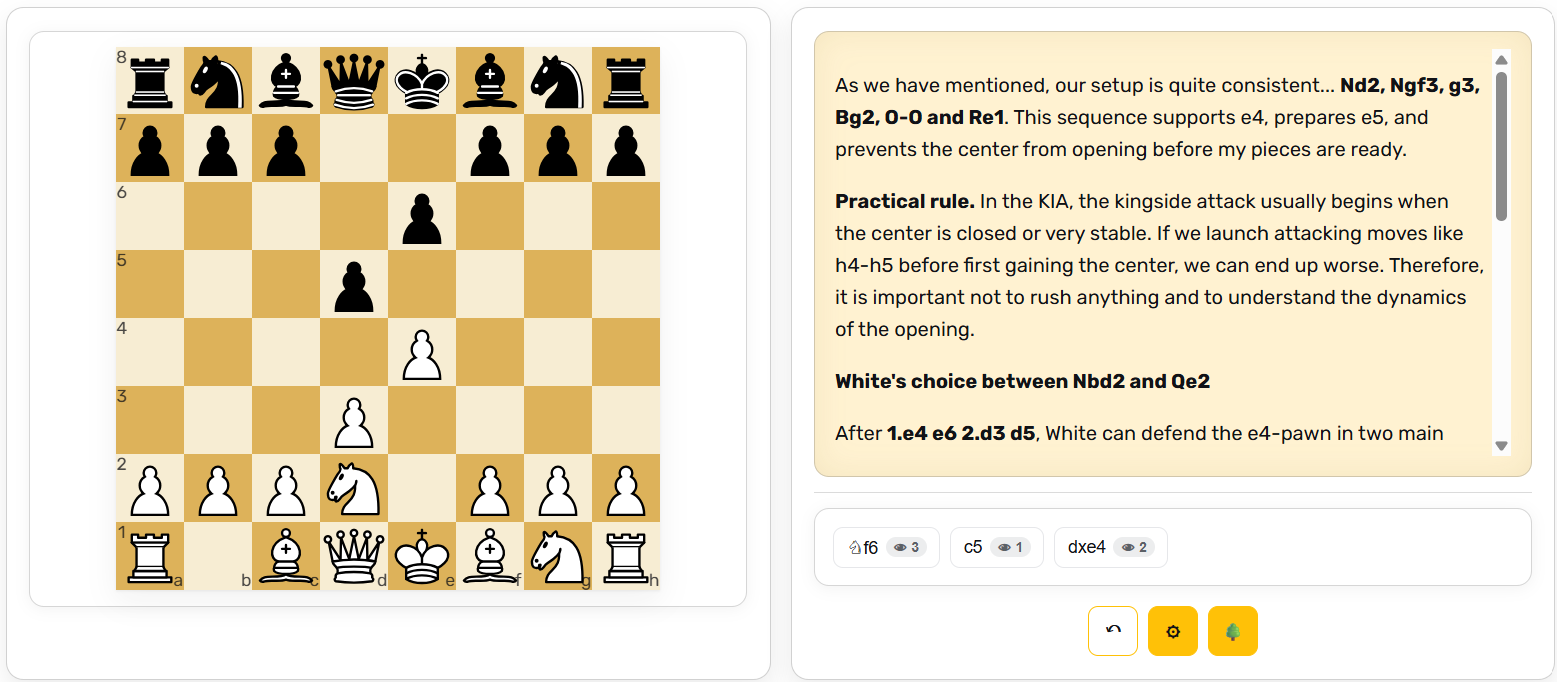
What is the King’s Indian Attack?
The King’s Indian Attack is built around a familiar development setup that White can reach through several different move orders:
e4 · Nf3 · g3 · Bg2 · O-O · d3 · Nbd2 · Re1 · e5
The aim is not to memorize a single forced sequence. White develops the pieces on natural squares and prepares e5, but the final decision depends on the center. If the center becomes closed or stable, a kingside attack often follows naturally. If the position opens earlier, White evaluates the new structure and decides whether the same attacking ideas still work or whether a different plan is required.
The standard offensive setup
In many French Defense positions, White develops with d3, Nd2, Ngf3, g3, Bg2, O-O and Re1, reinforcing the e4 pawn and preparing the advance e5. This setup gives White a clear basis for kingside play, but the timing and form of the attack depend on how Black reacts in the center.
What you will learn in this repertoire
- How to meet the French Defense with a coherent King’s Indian Attack setup instead of entering the longest main lines.
- How the same development scheme can also be used against many Sicilian structures and some Caro Kann move orders.
- When e5 creates the conditions for a kingside attack, and when White should remain flexible.
- How to respond when Black plays an early ...dxe4 and changes the character of the center.
- How White’s plans adapt against ...g6, queenside castling and early ...Bc5 transpositions.
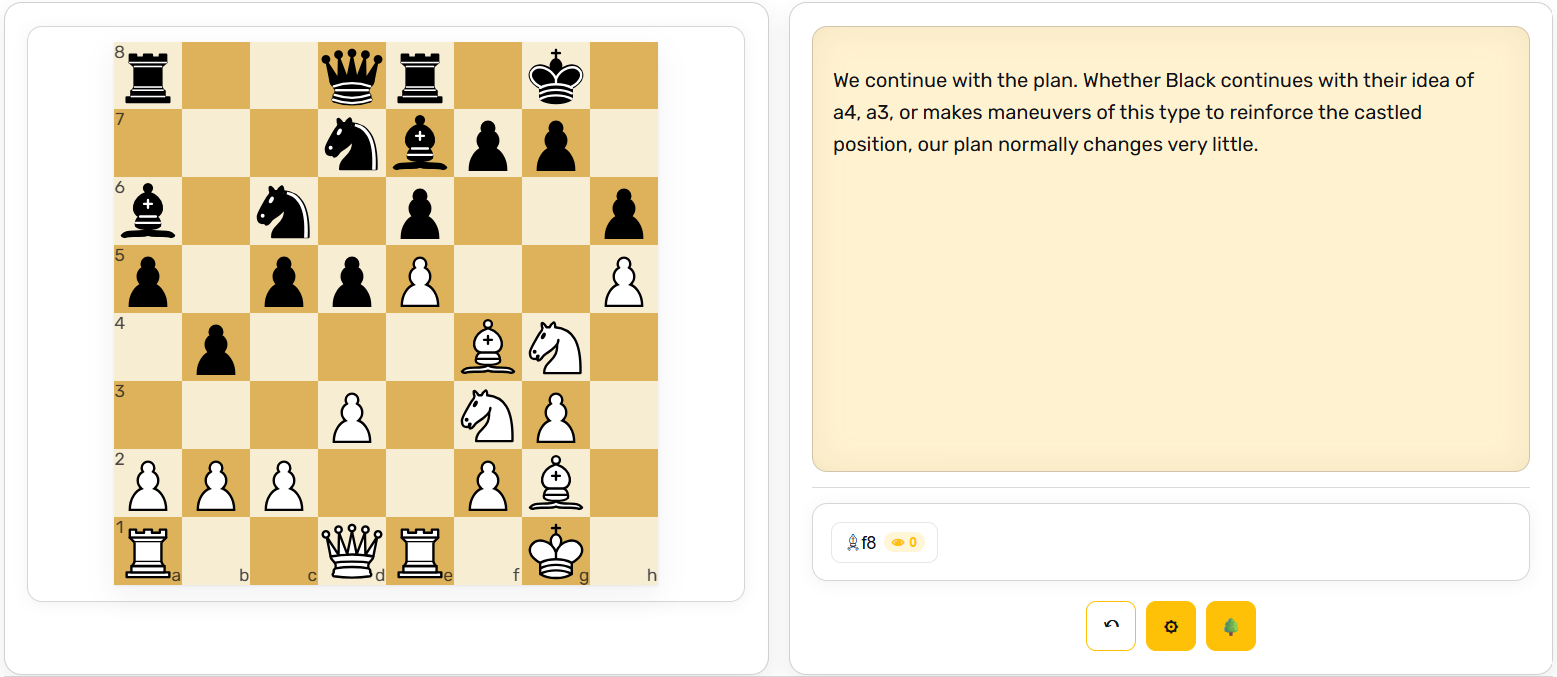
When Black plays an early ...dxe4
Black can exchange on e4 before White completes the usual setup, opening the center and changing the character of the position. White must first resolve the situation in the center and complete development. Some familiar attacking ideas may still remain available, but their timing and execution will depend on the resulting structure.
Choosing the right attacking pattern
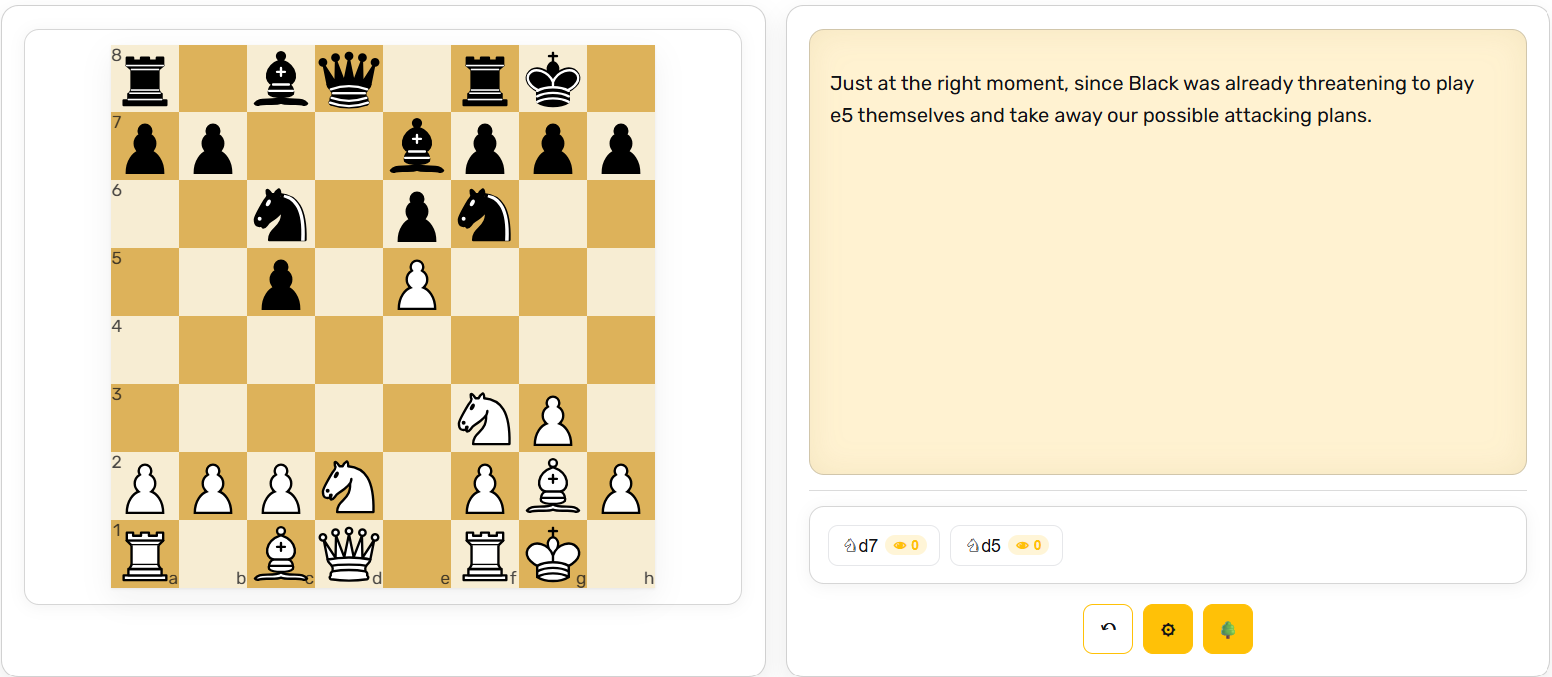
One of the main advantages of the King’s Indian Attack is that White often reaches similar attacking positions against different defensive setups. Black may respond with ...g6 or ...h6, or avoid moving the kingside pawns and defend with pieces through moves such as ...Bf8 or ...Nf8. The repertoire compares these recurring positions and explains which attacking patterns become most effective against each defensive strategy.
When Black castles queenside
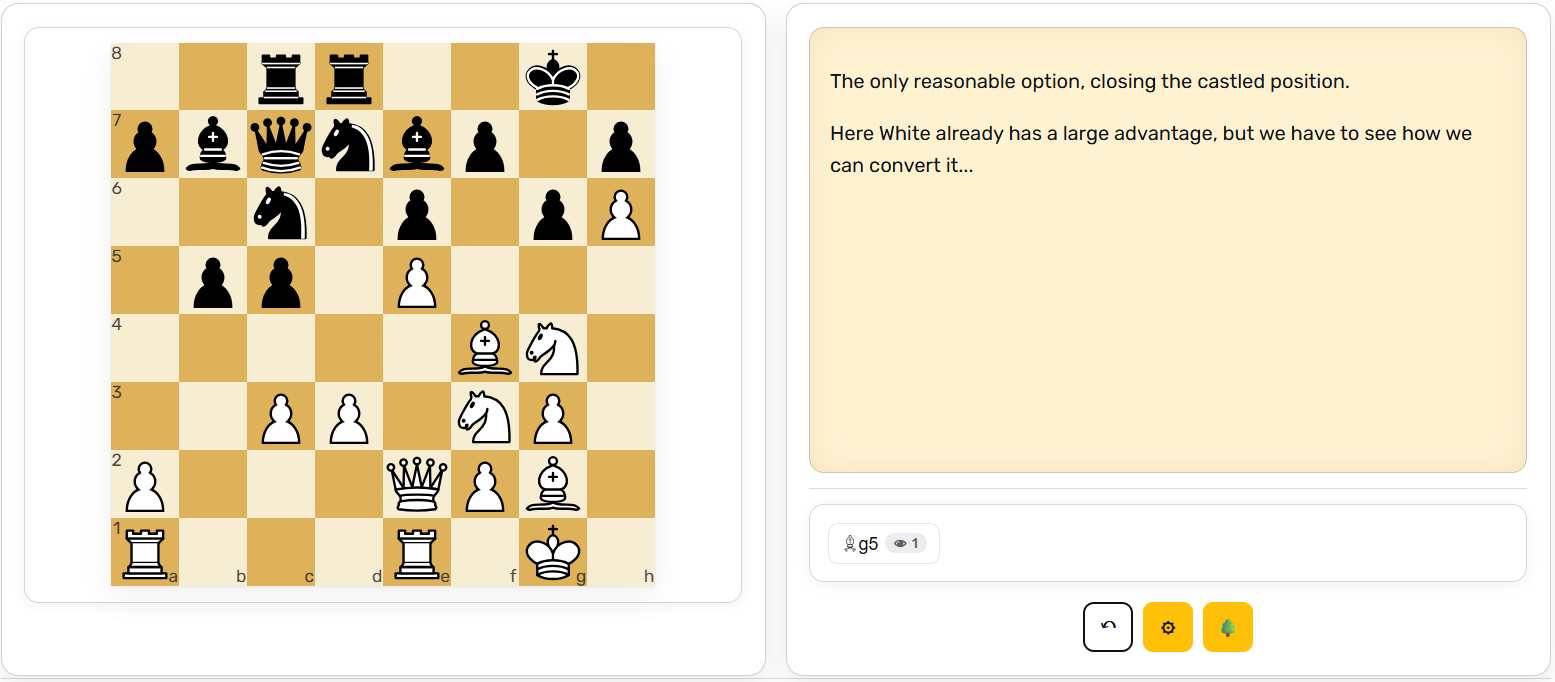
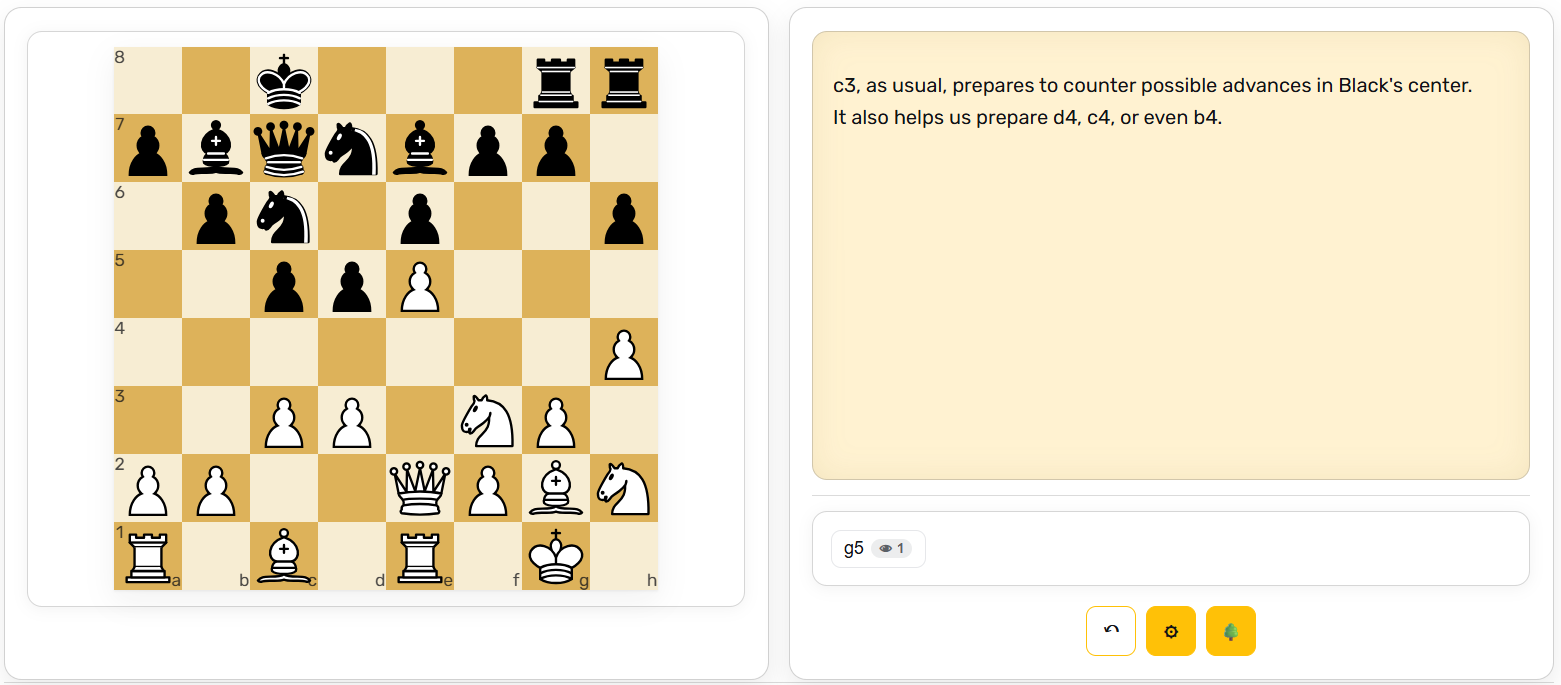
When Black castles queenside, White can no longer assume that the usual kingside attack is the best plan. The game may develop on both wings, with Black seeking counterplay against the white king while White looks for ways to reach the queenside. The repertoire shows how White can effectively restrict Black’s kingside counterplay before redirecting the pieces and pawns toward the black king, often emerging with the more favorable initiative.
Responding to an early ...Bc5
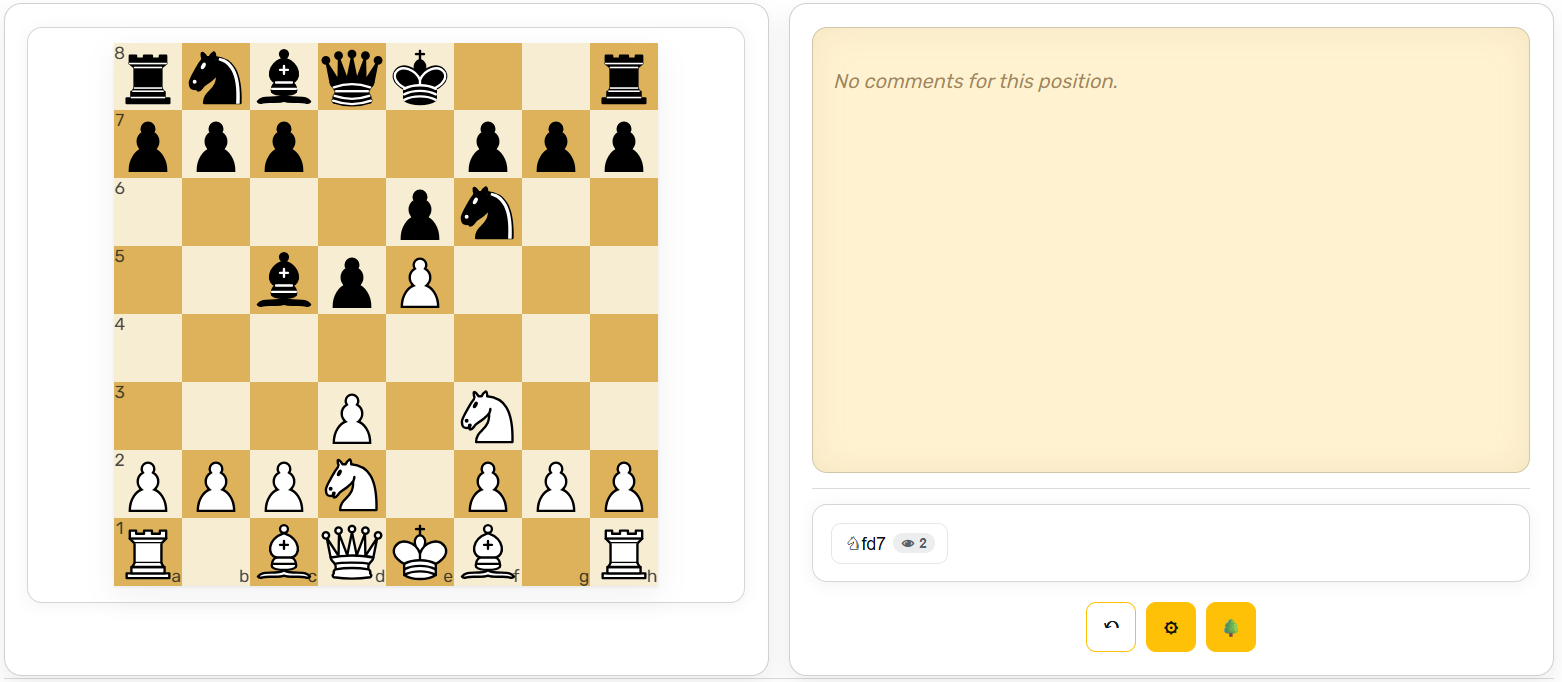
An early ...Bc5 is an important example of why White should not play the usual setup automatically. In some positions, the natural move g3 allows Black to create immediate tactical pressure against f2. The repertoire explains how to recognize this move order in time and switch to a more suitable plan, allowing White to continue with active and coherent play.
A practical waiting move in a French Tarrasch structure
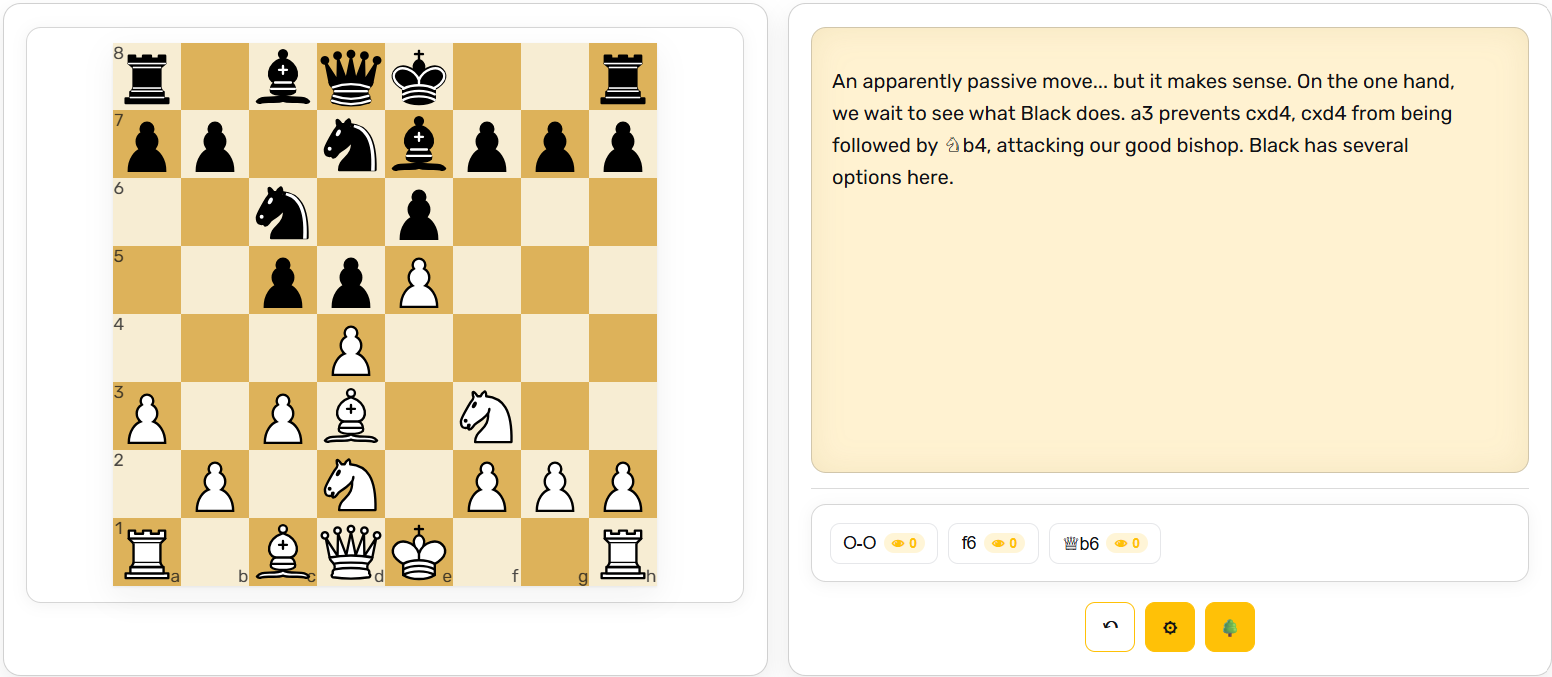
After an early ...Bc5, White can respond with e5 and d4, reaching a French Tarrasch structure after ...Nfd7, ...Be7, Bd3, ...c5, c3 and ...Nc6. In this position, the repertoire proposes a3, a move that has been explored very little from White’s side. It may look quiet, but it asks Black to reveal the intended setup while also discouraging a later ...b4 that could gain time by attacking the bishop on d3 after central exchanges. White keeps several plans available and reaches a flexible and highly interesting game that most opponents are unlikely to know well.
Price and philosophy
The King’s Indian Attack pack is available for 4 USD as an optional way to support AmberChess. Every user can also import one opening pack for free, so you can choose this repertoire without paying if it is the one you most want to study.
The idea is to keep AmberChess useful, accessible and free from subscriptions, while offering carefully annotated repertoires for players who want more structured guidance. Players who choose to purchase the pack help support the continued development of the platform.